
 Česky
Česky  English
  Deutsch
  Українська
 Rhinoplasty
The nose is the centrepiece of the face. It influences its overall proportions, the balance between individual features, and the final impression the face leaves. It is therefore no surprise that rhinoplasty has long been one of the most sought-after procedures in plastic surgery. At the same time, it is one of the most demanding surgical procedures on the face. The outcome depends on the precision of the work, the surgeon's experience, and also on how well the patient understands the whole process, from preparation to recovery.
What rhinoplasty is and what it can change
Rhinoplasty is a surgical procedure that alters the shape, size, or structure of the nose. It can be purely aesthetic, functional, or a combination of both.
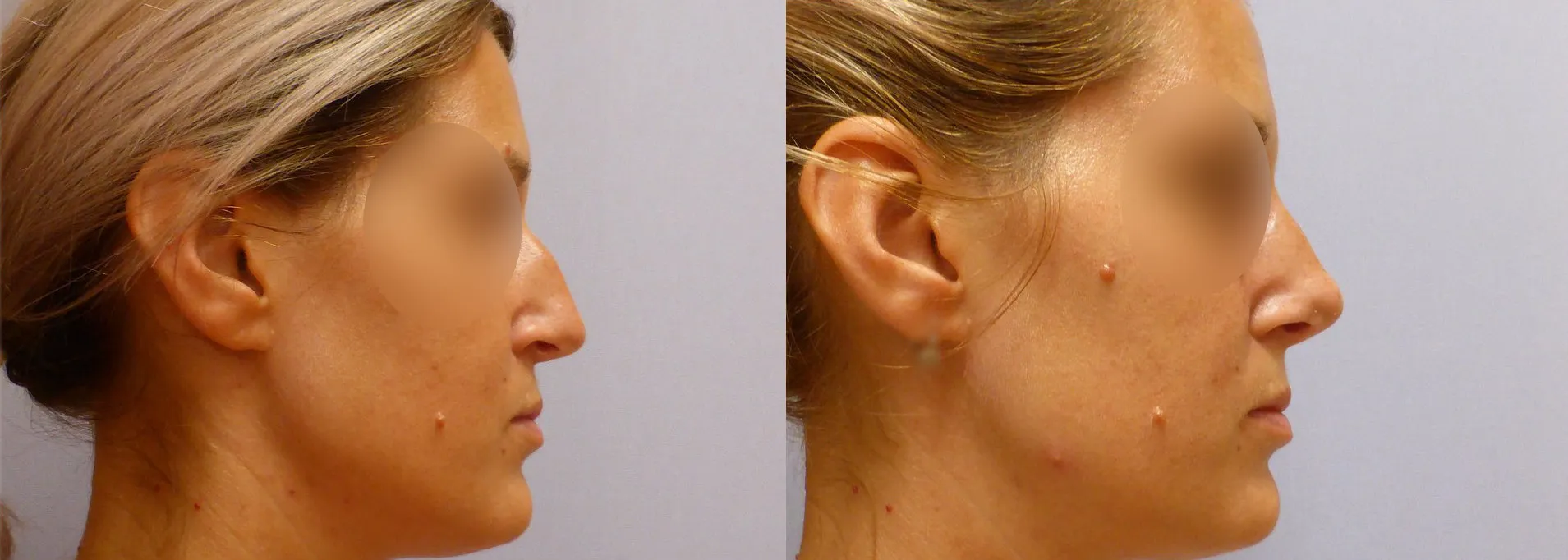
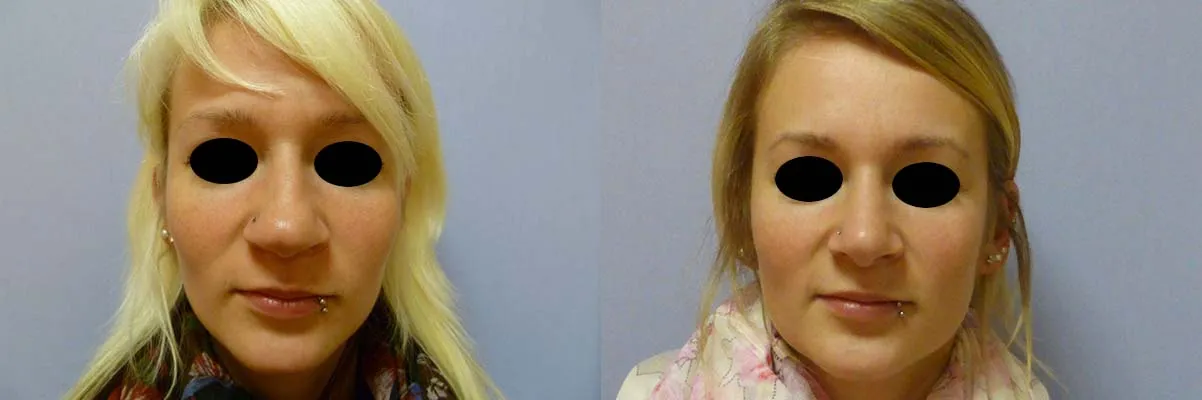
Aesthetic rhinoplasty addresses visual dissatisfaction with the shape of the nose. Most often this involves reducing or reshaping a hump on the nose, adjusting the width or shape of the tip, correcting asymmetry, changing the angle between the nose and the upper lip, or reducing the overall size of the nose.
Functional rhinoplasty focuses on restoring or improving the airflow through the nasal passages. The most common cause is a deviated nasal septum, which causes breathing difficulties.
Who is a suitable candidate for rhinoplasty
Rhinoplasty is suitable for adult patients whose facial skeleton is fully developed. In women, development is usually complete around the age of 16, in men generally somewhat later.
Rhinoplasty is suitable for patients addressing a specific problem with the shape or function of the nose. Most often this concerns:
- A visible hump on the nose that disrupts the facial profile
- A wide, asymmetrical, or drooping nasal tip
- Uneven or overly large nostrils
- An overall nose size that is out of proportion to the rest of the face
- A deviated nasal septum causing breathing difficulties
An important prerequisite is also that the patient is in good health, has realistic expectations, and is prepared to respect the course of recovery.
Rhinoplasty is not suitable for patients with an active infection in the area of the nose or oral cavity, with certain blood disorders, or during pregnancy and breastfeeding. Our doctor assesses everything individually during the consultation.
Types of rhinoplasty
Rhinoplasty is performed using two basic techniques. The choice depends on the extent of the planned changes and on the individual anatomical conditions.
- Closed rhinoplasty – Performed exclusively through incisions inside the nostrils. The scars are not visible from the outside. This technique is suitable for less extensive corrections and has a shorter period of swelling.
- Open rhinoplasty – Additionally uses a small incision in the area of the columella (the thin skin between the nostrils). It gives the surgeon better access to and an overview of the structure of the nose. It is suited to more complex adjustments, particularly tip correction or extensive restructuring. After healing, the scar in the columella area tends to be very inconspicuous.
The choice of technique always rests with the surgeon, who decides on the basis of the planned result and the anatomy of the individual patient.
How rhinoplasty proceeds
Rhinoplasty is performed under general anaesthesia. The operation usually takes 1.5 to 3 hours, depending on its extent.
The surgeon makes incisions according to the chosen technique, frees the skin from the underlying structures, and then adjusts the bony and cartilaginous parts of the nose. If correction of the septum is part of the procedure, it is carried out at the same time. Once the adjustments are complete, the skin is returned to its place, the wound is closed with sutures, and the nose is secured with a splint or a plaster dressing. After the operation, the patient stays at the clinic for one day.
Frequently asked questions about rhinoplasty
How painful is the recovery?
Recovery after rhinoplasty tends to be associated more with discomfort than with significant pain. The most common complaint is a blocked nose, pressure in the face, and a feeling of tension. Pain can be managed with standard analgesics.
Is general anaesthesia necessary?
Rhinoplasty normally requires general anaesthesia. In some specific cases, partial corrections can be performed under local anaesthesia with sedation, but these are exceptions.
How do I know whether rhinoplasty is right for me?
The best answer comes at a personal consultation. The doctor will assess the anatomy of your nose, discuss your expectations, and propose a solution that makes sense for your particular face.
When can I return to sport?
A light walk is possible as early as the first week. More intensive sport and physical strain are prohibited for at least six weeks. Contact sports and activities with a risk of injury to the nose are not recommended for three to six months.
A result worth the patience
Rhinoplasty is a decision that deserves time and careful consideration. Proper preparation, understanding the course of recovery, and realistic expectations are just as important as the operation itself.
Swelling subsides over weeks, the skin adapts over months, and the result matures over a full year. If you are considering rhinoplasty, the first step is a consultation.
Contact
Do not hesitate to contact us. We will be happy to help you choose the right procedure.
Book consultationConsultations every Thursday 10:00 AM – 1:00 PM